In mid-March, more than fifteen African countries experienced disruptions to their
internet access . The disruptions ranged from poor connectivity to complete internet blackouts. The cause was a simple accident: the rupture of several submarine cables off the coast of Ivory Coast.
While this type of incident is not uncommon, the consequences here were significant. Africa is indeed connected to the rest of the world via submarine cables, but these are too few in number to offer sufficient resilience, unlike in other regions.
According to figures put forward by Aminata Ndiaye, Orange’s regional vice-president for the Middle East and Africa, only 16% of the continent’s Internet traffic remains there compared to 27% for Europe, ” being connected to the world remains essential for Africa ,” she concludes to explain the scale of the event .
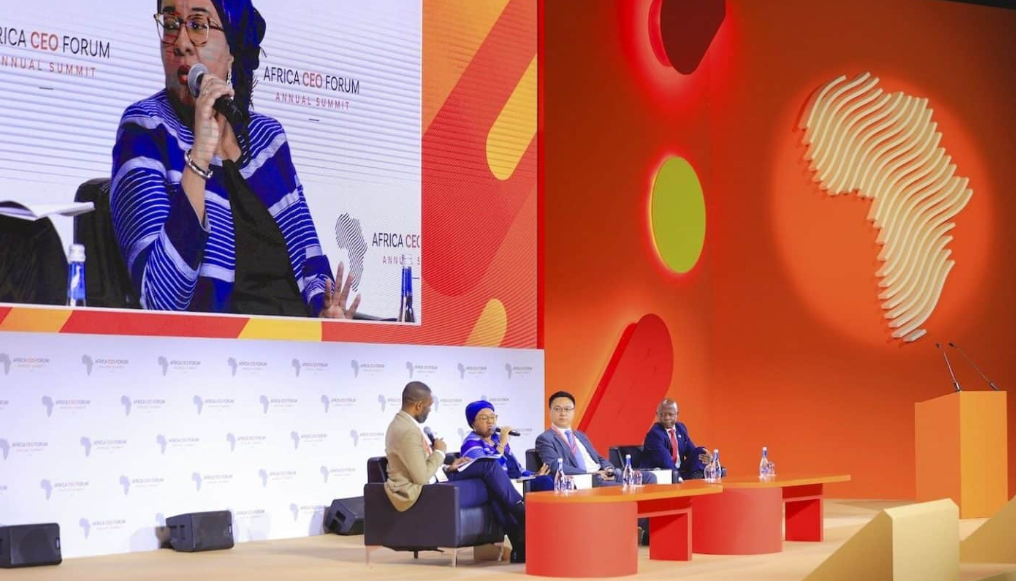
The issue was raised in numerous speeches at the Africa CEO Forum organized in May by the media outlet Jeune Afrique . Paul Kagame, President of Rwanda, the host country for this 2024 edition, alluded to it. He illustrated the persistent digital divide between Africa and the rest of the world. Even when isolating the Global South, the continent appears particularly far behind in a sector presented as a key driver of growth.
The lack of infrastructure remains glaring in Africa
“ Africa experienced the fastest growth in international bandwidth usage during the 2017-2022 period, with a compound annual growth rate (CAGR) of 51%, ” explained Gregor Theisen, McKinsey’s managing partner for Africa, using a PowerPoint presentation. “ Africa is currently the continent where internet traffic is increasing the most, ” added Aminata Ndiaye.
Submarine cables, fiber optics, and data centers have been developing rapidly across the continent over the past decade. Today, tech giants are financing these installations, seeking to capture a market widely perceived as highly promising. This momentum accelerated during the Covid period and remains strong, despite a recent slowdown.
This catch-up digitization, however, is still accompanied by significant gaps and disparities. Africa, often underestimated in cartographic representations, is a continent with 54 countries in widely varying situations. There is a disparity between the ten largest economies on the continent and the 30% of states experiencing conflicts of various kinds.
These disparities are glaringly obvious when it comes to the internet. 570 million of the continent’s 1.4 billion inhabitants use it. According to 2023 figures from the International Telecommunication Union, 57% of individuals living in urban areas use the internet, compared to 23% in rural areas. The same disparity exists between genders, with 42% of men using it, compared to 32% of women.
Internet access is difficult to provide, as many regions lack basic infrastructure. In 2021, 567 million people in sub-Saharan Africa lacked access to electricity. During a discussion among presidents following the Africa CEO Forum, the President of Mozambique, Filipe Nyusi, revealed that 60% of his country was in this situation. He observed that under these conditions, a genuine digital transformation is difficult to envision.
After access to the Internet, the use of the Internet
The effects of this lack of digital and other infrastructure are reflected in various statistics on internet access: only 50% of the African population has access to 4G. Today, smartphones are by far the preferred means of accessing the internet. Globally, 88% of the population has access to 4G.
There are many barriers to access, but just as many to usage. The cost of internet is on average 30 to 35% higher in Africa compared to the United States. At the same time, 60% of the world’s people living in extreme poverty—that is, earning less than $1.90 a day—are concentrated on the continent.
According to estimates from the International Finance Corporation (IFC), the arrival of new cables, which will increase bandwidth sixfold by 2027 compared to 2022, would reduce the price of broadband internet by 10 to 11%.
This decrease, which the international organization, a member of the World Bank Group, notes is smaller than previously projected. It also indicates that the construction of the mid- and last-mile infrastructure would require $6 billion in investment annually.
The ICF, a partner of the Africa CEO Forum, took advantage of this international gathering to unveil its latest report, “Digital Opportunities in Business.” In this report, the institution, which specializes in supporting the private sector in developing countries, notes that 86% of African businesses have access to the internet. However, only 24% make intensive use of it in their operational functions.
Several factors have been identified; the infrastructure deficit has already been mentioned, as well as the price of internet access. Regarding the “additional costs associated with internet,” it should be added that equipment is 35% more expensive than elsewhere, software is 20% more expensive, and skilled labor is 2.2 times more expensive. Access to financing is another issue, as the continent is currently experiencing a difficult economic situation. Finally, regulations and trade barriers complete this picture.
On this point, Aminata Ndiaye, joined by Tonny Bao, Huawei’s vice president, argues ” for stable taxes and regulations .” This is a typical demand from private companies. The French telecommunications group and the Chinese equipment manufacturer justify this request by citing their ” long-term investments .”
Alongside the two industrialists, Mmusi Kgafela, Botswana’s Minister of Trade and Industry, advocated for greater harmonization of regulations among African countries regarding the digital economy and facilitating the movement of talent, following the European Union model. The African Union is already working on projects of this kind through the Policy and Regulation Initiative for Digital Africa (PRIDA) and the African Continental Free Trade Area (AfCFTA).
Makhtar Diop, CEO of the ICF, explains that ” Research shows that digitalization can foster growth in productivity, employment, exports, and income, as well as contribute to poverty reduction .” McKinsey projects 3.2 million jobs, a 1 to 2 percentage point increase in GDP by 2028, and a doubling of productivity on productivity—these are the figures put forward by McKinsey regarding the impact of digital transformation in Africa. At the press conference accompanying the IFC study, Susan Lund, the organization’s Vice President for Economics and Private Sector Development, stated that this transformation is a ” journey ” before developing, adding, ” It has taken time everywhere in the world, and it is taking time in Africa too .”
Leave a Reply