Author: mangoz

  • In Southeast Asia, digital technology is booming.

    In Southeast Asia, digital technology is booming.

    “The coronavirus has driven a permanent and massive adoption of digital technologies,” states the report by Google , Temasek Holdings (a Singaporean public investment firm), and Bain & Co. (an American strategy and management consulting firm). Their study focuses on six Southeast Asian countries: Indonesia, Malaysia, Vietnam, Thailand, Singapore, and the Philippines.

    Published on November 10, 2020, and cited by Reuters , the report estimates that the internet sector will reach $105 billion (approximately €90 billion) this year. The findings indicate that 70% of the population in the defined region is now connected to the internet. This represents 400 million internet users, 40 million of whom are new users. The explanation, which at this stage of the pandemic is no longer surprising, highlights that consumers, forced—or encouraged—to stay home, turned to the internet for shopping, grocery and meal deliveries, and entertainment. “When we ask consumers why they chose to use e-commerce during the pandemic, they tell us that it was indeed to avoid potential exposure to Covid-19.” But what’s really important is that almost the same percentage of people say it’s because it’s efficient and convenient,” said Stephanie Davis, Google’s vice president for Southeast Asia, on CNBC ‘s “Squawk Box Asia” on November 10, before the official release of the report.

    The report focused on five pillars of the digital economy: e-commerce, transportation, food delivery, travel, media, and finance. E-commerce saw growth of 63%, reaching $62 billion (approximately €52 billion), while travel declined by 58% to $14 billion (nearly €12 billion).

    Given the development needs of these countries, this region represents a wealth of opportunities for investors, as evidenced by Netflix’s latest results . This context also explains why many new users come from non-metropolitan areas of Malaysia, Indonesia, and the Philippines. It also explains why Singapore—which already has a largely digitalized economy but is dependent on tourism—is experiencing a 24% recession in its internet economy. Conversely, it explains why Vietnam and Indonesia are experiencing double-digit growth.

    Since 2019, Southeast Asia has seen an average growth of 5% in its internet economy and 11% in the number of online users. Globally, according to We Are Social, the number of internet users is growing by “only” 7.4%. Southeast Asia represents one of the fastest-growing internet markets in the world. However, while more people are conducting online transactions, this does not necessarily mean they will be spending more by the end of the year.

    Thus, the growth outlook for 2025 remains virtually unchanged. Estimated last year at $300 billion (approximately €253 billion) in terms of gross merchandise value, this year’s forecast anticipates $309 billion. This outlook benefits regional companies , such as Malaysian firm Grab and Indonesian company Go-Jek, which offer multi-service platforms ranging from finance and delivery to entertainment.

  • Africa wants its place at the AI ​​table\

    Africa wants its place at the AI ​​table\

    Artificial intelligence, a key topic this year, naturally found its place at the Africa CEO Forum, held in Kigali in mid-May. During this “African Davos,” as it is sometimes called, discussions about AI and how the continent can and should play a role in the sector abounded.

    To be an active participant in AI rather than a passive recipient of it

    “ A place at the table or on the menu? ” This is the theme of the 2024 edition of the event organized by the media outlet Jeune Afrique . In his introductory speech, Amir Ben Yahmed, creator of this meeting of some 2,000 political and economic leaders from the continent, explained this choice: Africa must take its rightful place and command respect in international exchanges, at the risk of ending up “ on the menu of global economic competition .”

    This issue becomes particularly relevant in the context of AI. Last year, Kenyan moderators working for a former OpenAI subcontractor mobilized to protest their working conditions. They were exposed daily to violent and shocking content for $1.46 to $3.74 an hour, in order to train the models of the industry leader .

    This situation illustrates how Africa can remain ” on the menu ” of AI, with low-paying, difficult jobs requiring few skills. Naturally, the ambition at the Africa CEO Forum was to demonstrate how the continent can and must have its rightful place ” at the table .”

    From the opening ceremony, Tawfik Hammoud, a member of the global executive committee of the consulting firm BCG, used his speaking time to praise AI. He emphasized this readily available opportunity for productivity gains and contributions to sectors such as education and healthcare.

    Several initiatives and successes were highlighted, such as the opening of specialized AI training programs in the Maghreb and the recent acquisition of the Tunisian startup InstaDeep for €600 million by the pharmaceutical giant BioNTech. Its co-founder, the Franco-Tunisian Karim Beguir, is among the winners of the TIME100 AI Impact ranking for his model capable of detecting new variants of Covid-19.

    Another prominent figure from the continent to feature in TIME’s list of the most influential people in AI is Kate Kallot, co-founder and CEO of the Kenya-based startup Amini. At the Forum, she made no secret of the challenges that must be overcome to make the continent a significant player in AI.

    Africa needs to complete its digital transition; AI can help.

    From a purely technical standpoint, two major challenges immediately come to mind: the need for infrastructure and the lack of data. This latter point is crucial for developing AI models that are truly adapted to African culture.

    During a discussion at the Africa CEO Forum, the businesswoman shared a personal anecdote to illustrate her point: ” I asked ChatGPT, ‘What is the national dish of the Central African Republic?’ and the answer was ‘nyembwe chicken,’ when in fact it’s the national dish of Gabon .” Alex Okosi, Google’s managing director for Africa, who was also on stage, seized the opportunity to suggest, amid laughter, that they look to his company’s model, Gemini.

    This issue of the cultural relevance of AI models is not unique to Africa. These models are primarily trained using English and Anglo-Saxon sources. When the newspaper Le Monde announced its agreement with OpenAI to allow ChatGPT to be trained on its content, the leading French media outlet rightly pointed out that its articles would make the French-language results more relevant .

    The other major barrier standing between AI and Africa featured prominently in many of the speeches at the event. Heads of state, ministers, business leaders, international organizations, startups… all emphasized the need to improve the continent’s digital infrastructure.

    As evidenced by the proliferation of multi-billion dollar data centers worldwide , AI requires this type of infrastructure. Africa is not entirely devoid of data centers; Alex Okosi is quick to point out that Google recently established a region in South Africa. However, the continent remains far less equipped than others.

    More generally, despite having the highest internet traffic growth in the world, there is still a long way to go to complete Africa’s digital transformation. AI, provided it fully embraces this shift, is presented as a way to make progress in this direction.

  • Study: Europeans are increasingly dissatisfied with traditional banking apps

    Study: Europeans are increasingly dissatisfied with traditional banking apps

    According to a report by the electronic identity provider Signicat, fewer and fewer Europeans are satisfied with banking apps . This trend became particularly pronounced in 2020, when the Covid-19 pandemic hit the continent hard.

    Consumers do not hesitate to abandon apps

    The study, conducted on a sample of 4,000 adults in seven European countries—Sweden, the Netherlands, the United Kingdom, Finland, Germany, Belgium, and Norway—reports that in 2020, 63% of Europeans stopped using their online banking app, compared to 38% in 2019. At the same time, the number of users relying solely on mobile banking services jumped from 30% to 47% in a single year, and 69% of these consumers reported being happier with this system than before.

    It’s primarily the integration process with online banking apps that bothers users. 38% of them find these steps longer than expected, while 26% consider them difficult. Finally, 69% of users ” believe that mobile service providers are better than more traditional providers .”

    Covid-19 and Generation Z

    “ Covid-19 also means that consumers are being pushed to work harder on their finances, increasing the potential for closer engagement with their financial service provider. But it also means more time and opportunities to shop online ,” the report explains. As a result, 41% of respondents were unable to access essential financial services during the pandemic, and 68% believe the current crisis will bring about a fundamental shift, leading to the introduction of a fully digital onboarding process.

    New fintech services already offer fast and simplified digital services compared to traditional banking apps. As a result, they are much more likely to appeal to young people.

  • In response to the government, Amazon unveils a section entirely dedicated to French products.

    In response to the government, Amazon unveils a section entirely dedicated to French products.

    Update : This shop has existed since 2018 and was therefore not specifically created in response to the current situation. However, its recent promotion is not insignificant.

    As France placed its entire population under lockdown to curb the spread of COVID-19 , more than 200,000 businesses across the country were forced to close their doors. This critical situation sparked a wave of anger towards e-commerce giants , due to perceived unfair competition. In this context, and to show its support for local businesses, the government called on the French to buy domestically produced goods, particularly through retailers other than Amazon . In response, Jeff Bezos’s company launched a “Made in France” shop on its website. Was this a way to support the French economy or a snub to the government and small businesses?

    E-commerce giants are provoking the anger of small French retailers

    As the holiday season approaches, and after several months of enforced closures, retailers fear that the new lockdown implemented on October 30, 2020, will be a fatal blow. Alongside their fear, they also feel a sense of injustice, anger, and powerlessness in the face of e-commerce giants like Amazon , which continue to thrive and profit from the health crisis. As a reminder, in the second quarter of 2020, Jeff Bezos’s company doubled its profits compared to the same period the previous year.

    These feelings are all the more heightened as Black Friday rapidly approaches . A key event for retailers, since beyond the exceptional promotions that drive customers to spend on that particular day, it also marks the start of holiday shopping . However, on November 27th, small businesses deemed non-essential will still be closed, and without taking too much of a risk, we can already predict that the e-commerce giants will once again reap the rewards.

    Last Friday, the National Council of Shopping Centers denounced the following  : “The French are officially encouraged to use the services of the worst competitors of physical commerce: international e-commerce platforms. These predators thrive while practically paying no tax, destroying jobs (…) and polluting cities with their vans and packaging by constantly selling at a loss.” 

    In response to these concerns, the government asked Amazon to suspend its advertising campaign promoting Black Friday on its platform. Agnès Pannier-Runacher, Minister Delegate for Industry, explained on Europe 1  :  “I asked Amazon to suspend the pre-Black Friday campaign because it was completely inappropriate at a time when 200,000 retailers are going to have to close their doors . “

    Amazon opens “the shop for French companies”

    While Jeff Bezos’s company complied with the French government’s request, it also simultaneously launched a “French Businesses Shop”  on its platform. Within this shop, and as the name suggests, consumers will find products exclusively made in France, across a wide range of categories: home, groceries, fashion, office supplies, high-tech, jewelry, sports, leisure, and more. All sectors appear to be represented, aiming to meet the diverse needs of customers with products “made in France.”

    One question remains, however: what are Amazon’s real intentions with the opening of this store? To support the French economy and its brands? Perhaps, but clearly, it’s not just that. Faced with the anger of shopkeepers at the government’s directives calling on the French to support their local businesses, Jeff Bezos’s company is primarily pulling off a major PR coup to absolve its customers of guilt , showing them that it’s not the big bad guy killing small French businesses, but that, on the contrary, it supports them.

    In reality, the outcome of this campaign to absolve small businesses of guilt is likely to be even more dramatic . Customers will probably feel reassured, believing they are supporting French brands by buying their products from Amazon, while brick-and-mortar retailers continue to struggle. Once again, we are witnessing a David and Goliath battle, and until there is greater regulation of Big Tech , the outcome of this fight seems inevitable for the time being.

  • 2.6 million French people have an account with a neobank

    2.6 million French people have an account with a neobank

    In France, 18 neobanks are currently operating, and six new players are expected to launch before the end of the year. Today, this sector boasts 2.6 million customers in France, three times more than in 2017. This trend isn’t unique to France; neobanks are also developing rapidly throughout the rest of Europe. To explain this phenomenon, Stéphane Dehaies of the KPMG France network explains: “By focusing on solutions centered on everyday banking services and payments, neobanks have perfectly understood how to adapt to new consumption patterns.”

    It’s true that opening an account with a neobank is very simple and quick; few documents are required, and attractive welcome offers encourage new customers to sign up. Unlike online banks, which are necessarily owned by a traditional bank (BforBank is a subsidiary of Crédit Agricole), neobanks are payment institutions that have obtained a banking license and focus on 100% mobile access. Much cheaper than traditional banks, but slightly more expensive than online banks, neobanks still offer a “low-cost” strategy. The most popular players are Orange Bank, C-Zam, N26 , and Monese.

    This second study 
    , “Overview of Neobanks in France,” conducted by KPMG partners, reports: “Neobanks are managing to generate savings that they pass on to their customers through lower fees. Several have already announced they are financially stable. Unlike traditional banks, which aim to serve all customer segments and have greater financial resources for innovation, neobanks do not hesitate to select priority segments.” Taking Revolut as an example, its “priority segment” is primarily millennials, or entrepreneurs.

    In the current context, where data protection is a major concern, neobanks must continue to work in order to find a genuine relationship of trust with customers.

  • Mark Zuckerberg’s true stances revealed in audio excerpts

    Mark Zuckerberg’s true stances revealed in audio excerpts

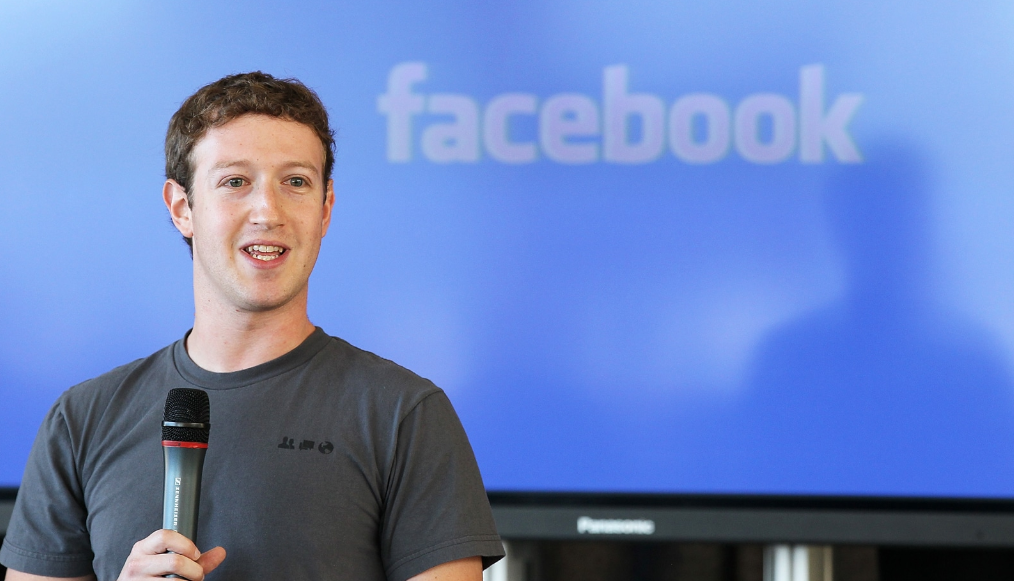
    The American media outlet The Verge has published several audio recordings in which Mark Zuckerberg can be heard discussing various topics with his employees. From the end of Facebook and the launch of Libra to competition and the working conditions of moderators, discover everything he thinks.

    Everyone knows Mark Zuckerberg. Founder of the world’s largest social network, his name has certainly reached everyone, whether you’re 14, 35, or 60. Even more so following the Cambridge Analytica scandal . Thrust into the spotlight since that scandal, he has had to defend himself before several governments.

    Mark Zuckerberg is well aware of his power and the power of his company

    One of his employees asked him how he handled media pressure. Zuckerberg simply explained, ”  I think most of the concern stems from people thinking our company is very powerful. It’s a concentration within the company, a concentration within one person. I think historically, that’s been very valuable… ” He then mentioned Yahoo’s 2006 takeover bid and Facebook’s diversification. He also added that he couldn’t attend all the hearings he was asked to give. Mark Zuckerberg has testified in the United States and Europe , but he hasn’t personally attended all of them.

    To conclude on this point, he said, “  I take my personal conduct and its impact on the company very seriously. But I think that, overall, the structure we had served the company and the community well… but we will always receive criticism .” Despite the threats , Zuckerberg has often made positive decisions for his company, which today have made Facebook a technological powerhouse.

    Facebook’s plan of attack to deal with TikTok

    TikTok is generating more and more buzz. Young people love the platform, and the company is deploying more and more solutions to attract advertisers. Facebook even seems to be taking inspiration from it for Instagram, which could soon launch Clips .

    Mark Zuckerberg acknowledges that ”  TikTok is the first mainstream internet product built by one of the Chinese tech giants that’s doing quite well. It’s starting to take off in the US, especially among young people. It’s growing very rapidly in India. It’s an interesting phenomenon .” The Facebook CEO compares the Chinese app to Instagram’s Explore tab. To counter TikTok’s rise, Facebook’s strategy is simple: develop Lasso, TikTok’s competitor, in countries where Chinese isn’t yet very popular, like Mexico, and then compete with the app in larger markets.
    Facebook is still Facebook, and Zuckerberg doesn’t hesitate to take a jab at his competitor, saying, ”  We’ve noticed that their retention rate isn’t very high once they stop advertising .” This statement indicates that the market isn’t saturated and that Facebook is ready to take its place!

    Facebook doesn’t want to implant chips in our brains.

    Mark Zuckerberg also addressed the topic of mind control. A few months ago, it was revealed that Facebook was working on a non-invasive toolbar for writing with thoughts. More recently, the company acquired CTRL-labs to accelerate the development of its non-invasive technology.

    The founder of Facebook finds the field fascinating and states that Facebook is working on a non-invasive approach, without surgery or implants. The company doesn’t want to recreate sci-fi movie scenarios, but simply allow a user to ”  click with your brain when looking at something in augmented reality .”

    Libra: a controversial but essential project

    Finally, Libra is a major topic for the social network. Announced last June, it has since faced criticism and generated apprehension . Despite a launch date that is expected to be pushed back, Zuckerberg explains that tests are underway in India. The project has different dimensions. One is to ”  allow people to send money as easily as you can send a photo or other content around the world to different people .” The other, larger dimension is to ” establish a new type of digital currency that can operate globally and will be stable .” It’s a colossal project, and Facebook wants to play an educational and consulting role, rather than simply launching a product out of the blue. Mark Zuckerberg is aware of the road ahead to arrive at a solid project that is accepted by users and governments. He is ready.

  • N26 now has more than 5 million customers worldwide.

    N26 now has more than 5 million customers worldwide.

    In December 2018, N26 had 2 million users . Today, five years after its creation, the neobank is present in around twenty countries worldwide and, more importantly, has just passed the 5 million customer mark .

    Aiming for 100 million customers?

    “ In the long term, we want to reach 100 million customers worldwide, ” warns Valentin Stalf. Traditional banks therefore have reason to be concerned, especially when you see N26’s growth in just five years. Since 2018, the neobank has attracted 2 million additional customers, and its expansion has allowed it to grow from a team of 300 employees to 1,500.

    Furthermore, the German company now has a presence in around twenty countries worldwide. Having entered the United States this year, it hopes to conquer the Brazilian market by next year. Ultimately, its goal is to invest in as many countries as possible to establish a global presence.

    Is N26 about to raise new funds?

    Last July, N26 raised €170 million, and its fundraising efforts to date total $683 million . This amount could still increase, as the bank doesn’t seem opposed to another round of financing, even if it’s not urgent.

    Regarding an IPO, the neobank’s president, Valentin Stalf, told Les Échos that it was still “too early,” though he didn’t rule it out entirely, envisioning it more likely in four or five years. The neobank is currently profitable and valued at $3.5 billion, allowing it to continue its growth at its own pace.

  • Revolut offers you the option to save your external accounts on its app.

    Revolut offers you the option to save your external accounts on its app.

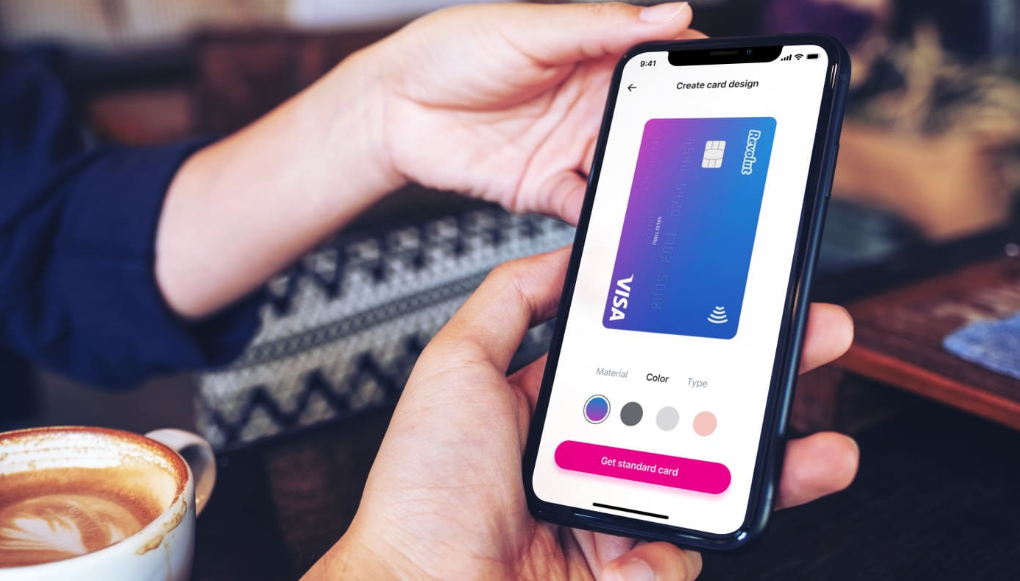
    Revolut is a British neobank, founded in 2015, known for having “ revolutionized banking ,” particularly with its trading platform, which allows users to invest in various companies. While the neobank’s working conditions for its employees were questionable in 2019, it seems that things have since improved. In any case, it has continued its development at its own pace, first by making its banking service compatible with Apple Pay in 16 European countries , and now by offering its customers the ability to manage all their accounts in a single app, as reported by TechCrunch .

    Connect external bank accounts

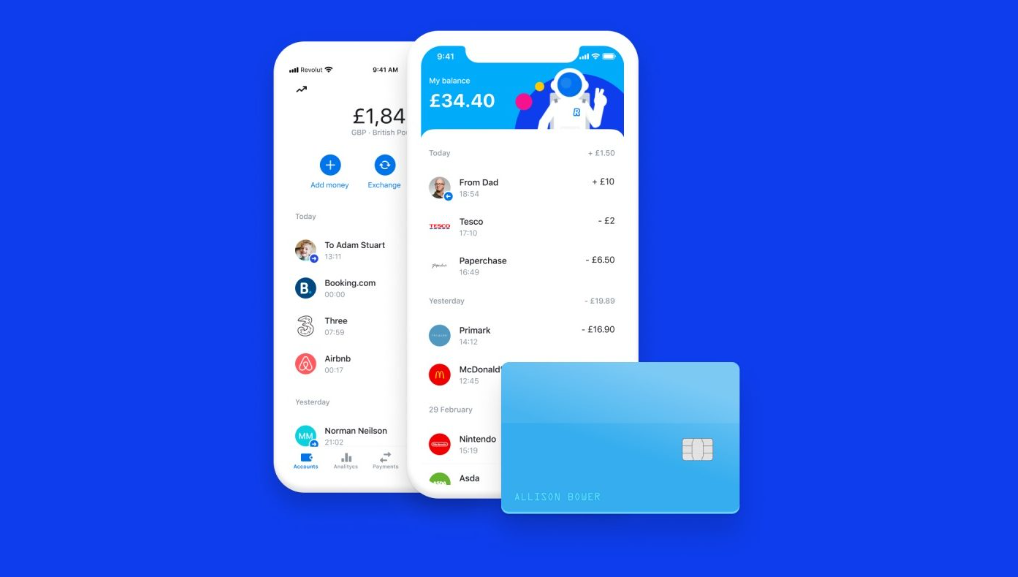
    For now, this new feature is only available to UK customers. They can now, whether personal or business customers, register their external accounts within the Revolut app, as long as the bank account in question is UK-based.

    Today, Revolut is aiming to place this new feature at the heart of the customer journey on its platform. According to Francesco Simoneschi, CEO and Co-founder of TrueLayer, an Open Banking app development service, Revolut intends to shift mindsets with this feature and convince its customers of its usefulness. The CEO stated, “ 
    This is the moment when Open Banking will become widespread. Revolut is placing this feature at the core of its customer journey and will make it the standard, not just in the UK .”

    Open banking, the bet of Revolut and TrueLayer

    Joshua Fernandes, Head of Open Banking Product at Revolut, said, “ We are delighted to see that the new legislation can change the financial landscape .” From a legal standpoint, Revolut is now able and authorized to be a “ bank account information service provider .” The neobank has indeed obtained approval from the UK regulator. Open banking, or unified access to a single person’s various bank accounts, appears to be the new strength of online banking.

    Currently, Revolut is unable to transfer funds or make payments via external accounts registered in the app. Furthermore, we don’t know when this feature will be available to customers worldwide.

    In France, this new feature is similar to the one available on the Lydia app.

  • Revolut launches Revolut Junior, an offer for minors

    Revolut launches Revolut Junior, an offer for minors

    TechCrunch has just spotted a new Revolut product: 
    an app linked to a bank card designed for users under 18. Everything is, of course, controlled via the Revolut app installed on the smartphone of at least one of the legal guardians.

    Revolut is suitable for 7-17 year olds

    Is a bank card useful for a 7-year-old? Everyone is entitled to their opinion on the matter. Nevertheless, Revolut aims to undercut traditional banks. For children who are getting smartphones at increasingly younger ages, it can provide a safe place to store pocket money and some savings. For parents, it allows them to maintain control over their children’s spending.

    Revolut, for its part, seems to believe that at 7 years old, a child is capable of having their own card. This card is called “ Revolut Junior ” and can be linked to a dedicated app for young children . Parents, however, must be Revolut customers to create their child’s account and then manage it directly from their app.

    Parents can thus monitor their children’s spending, disable online purchases, and receive notifications whenever their child uses their card. A feature also allows them to instantly add money to their account. This helps empower children and teach them, over time, how to manage money.

    A well-thought-out strategy

    Currently, Revolut boasts over 10 million users worldwide. Having raised $500 million, the largest funding round for a fintech company in Europe , the neobank seems determined to attract new customers. Its strategy is quite well thought out. Currently, if parents who are customers open an account for each of their children between the ages of 7 and 17, there’s a good chance that many of those children will remain customers of the neobank once they reach adulthood.

    This is an approach similar to that of traditional banks for many years. However, the trend has reversed, and traditional banks today resemble grocery stores where products are prioritized over the customer experience. A child will have a separate, fully functional account, will have to use the same login platforms as adults, with a complex interface far removed from the ease of use of the apps they already know. Since children are getting smartphones at increasingly younger ages, it makes sense to create a streamlined, simple, and fun Revolut app.

    Currently, Revolut Junior is only available to Premium and Metal customers, and only in the UK. If the UK market proves successful, Revolut is expected to soon make the service available to more users in more countries.

    To expand the offering of Revolut Junior, the neobank is considering offering children the possibility to save and review their spending.

  • The European CHIPS Act is gradually coming into effect with an investment in IMEC

    The European CHIPS Act is gradually coming into effect with an investment in IMEC

    Several research laboratories led by the Institute for Microelectronics and Components (Imec), based in Leuven, Belgium, will receive 2.5 billion euros in subsidies under the European Chips Act .

    Advanced chip research and development in Europe

    The project aims to establish a pilot line to develop and test future generations of advanced computer chips, those smaller than 2 nanometers. The objective is to help European industry, academics, and startups access chip manufacturing technology that would otherwise be too expensive for them to test or use in their development.

    This European-led line is designed to contribute to the development of even more advanced future generations of chips. It will be equipped with materials from European and global companies specializing in equipment and materials.

    “ This investment will allow us to double our learning volumes and speed, which will accelerate our pace of innovation, strengthen the European chip ecosystem, and stimulate economic growth in Europe ,” commented Luc Van den Hove, CEO of Imec, in a statement quoted by Reuters . Sectors such as automotive, telecommunications, and healthcare are expected to benefit from this effort.

    The French laboratory CEA-Leti is among the institutes participating in the project, which is funded to the tune of €1.4 billion by several EU programs and the Flemish regional government. Industry players, such as the Dutch giant ASML, will contribute €1.1 billion to the initiative.

    A total of 43 billion euros in subsidies

    Approved in 2023 by EU leaders , the Chips Act is a €43 billion plan to increase European semiconductor production from 10% to 20% of the world total by 2030. To achieve this, the authorities provide subsidies to companies wishing to establish themselves on the Old Continent.

    Until now, STMicroelectronics was the only company to have received aid under the legislation. TSMC and Intel are awaiting approval from the authorities to benefit from it, as both companies wish to build a production plant in Germany.

    After pandemic-induced shortages highlighted the risks of relying on the global supply chain for essential technologies, many countries decided to invest in achieving self-sufficiency in semiconductor production. Large-scale national plans also emerged in the United States, China, Japan, and South Korea.