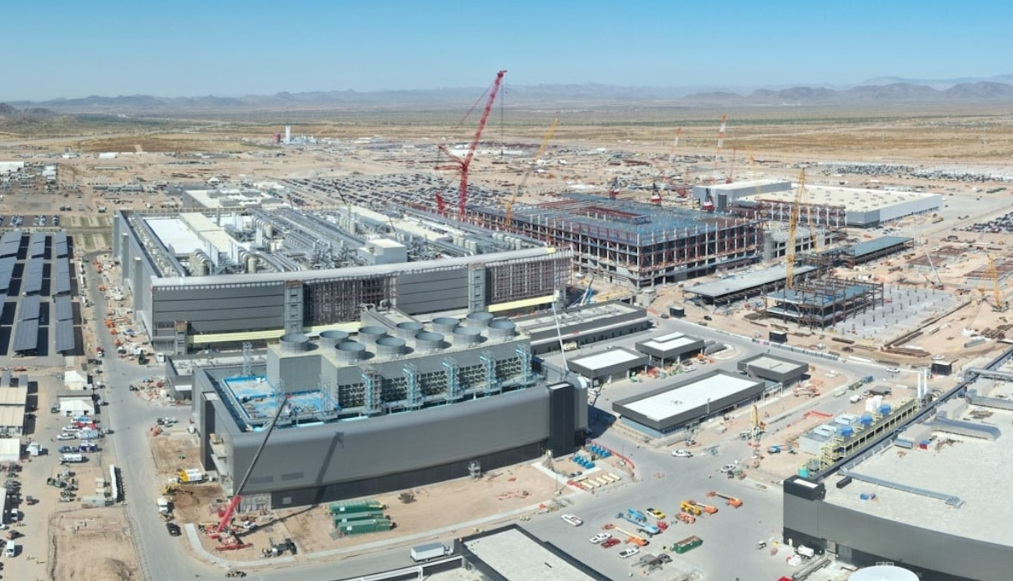
Chips burst onto the media scene in the early 2020s. A shortage of
these essential components for all electronic products brought car factories to a standstill and made game consoles and smartphones difficult to access. This scarcity has various causes: Covid-19, international tensions… and climate change.
Semiconductors rather than agriculture?
Three years ago, Taiwan experienced its worst drought in 56 years. Paradoxically, the island is one of the wettest places on Earth, receiving roughly twice as much rainfall as Finistère, France. However, unlike Brittany, Taiwan relies heavily on three or four seasonal typhoons for its water supply. By 2021, none of these weather events had occurred for two consecutive years, leading to critically low reservoir levels. Taipei was forced to impose water rationing on its two main industries: agriculture, traditionally the most water-intensive sector, and semiconductor manufacturing.
Its flagship company in the sector, the Taiwan Semiconductor Manufacturing Company (TSMC), alone supplies 90% of the world’s advanced chips. The 36,000 km² island provides 18% of the semiconductors in circulation globally. This commercial dominance has taken on a geopolitical dimension : several local political leaders believe it protects against a Chinese invasion. This is referred to as the “silicon shield,” silicon being the raw material for the majority of these electronic components. Furthermore, when drought forced water conservation, a report by the UN Institute for Environment and Human Security noted that ” although both sectors experienced rationing measures, the semiconductor industry clearly took priority over rice production .”
Water is a major issue for industry. A recent report by S&P Global estimates that water scarcity in the coming decades will pose a serious threat. The semiconductor sector has enormous needs; ” globally, chip manufacturers already consume as much water as Hong Kong, a city of 7.5 million inhabitants ,” notes S&P.
This demand stems from the requirement to manufacture chips in ultra-clean environments. The slightest particle can ruin a production run. To avoid this, manufacturing takes place in cleanrooms where the air is 10,000 times purer than in an operating room. To clean all the tools and materials used in the process, artificially pure water, produced by the companies, is necessary. The resource also has more traditional industrial uses, such as cooling energy-intensive installations or “cleaning” toxic gases.
In Taiwan, 2021 saw the deployment of tanker trucks at the entrances to scientific campuses housing semiconductor “fabs.” The industry nevertheless had to slow its consumption by 15%, exacerbating the ongoing global shortage.
Leave a Reply